
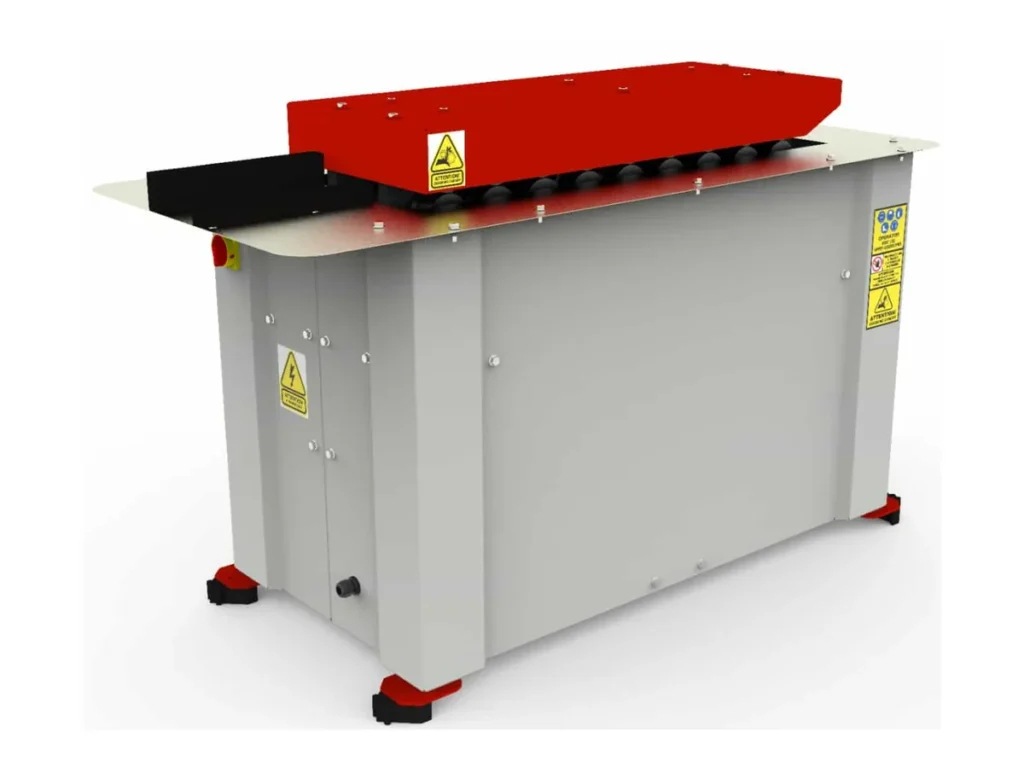
The Pittsburgh Lock Former roll-forms lock profiles on the edges of galvanized sheet. With those edges you can join the parts of heating, cooling and ventilation ducts and make the fittings that go with them. EBR METAL builds this lock forming machine in two models. The LFM 10 uses 7 forming stations and the LFM 12 uses 9. We select the roller tooling for the lock and edge profiles you need. Both models form 0.5–1.2 mm sheet, run on a 380 V, 3-phase supply and are handled with a brake wheel.
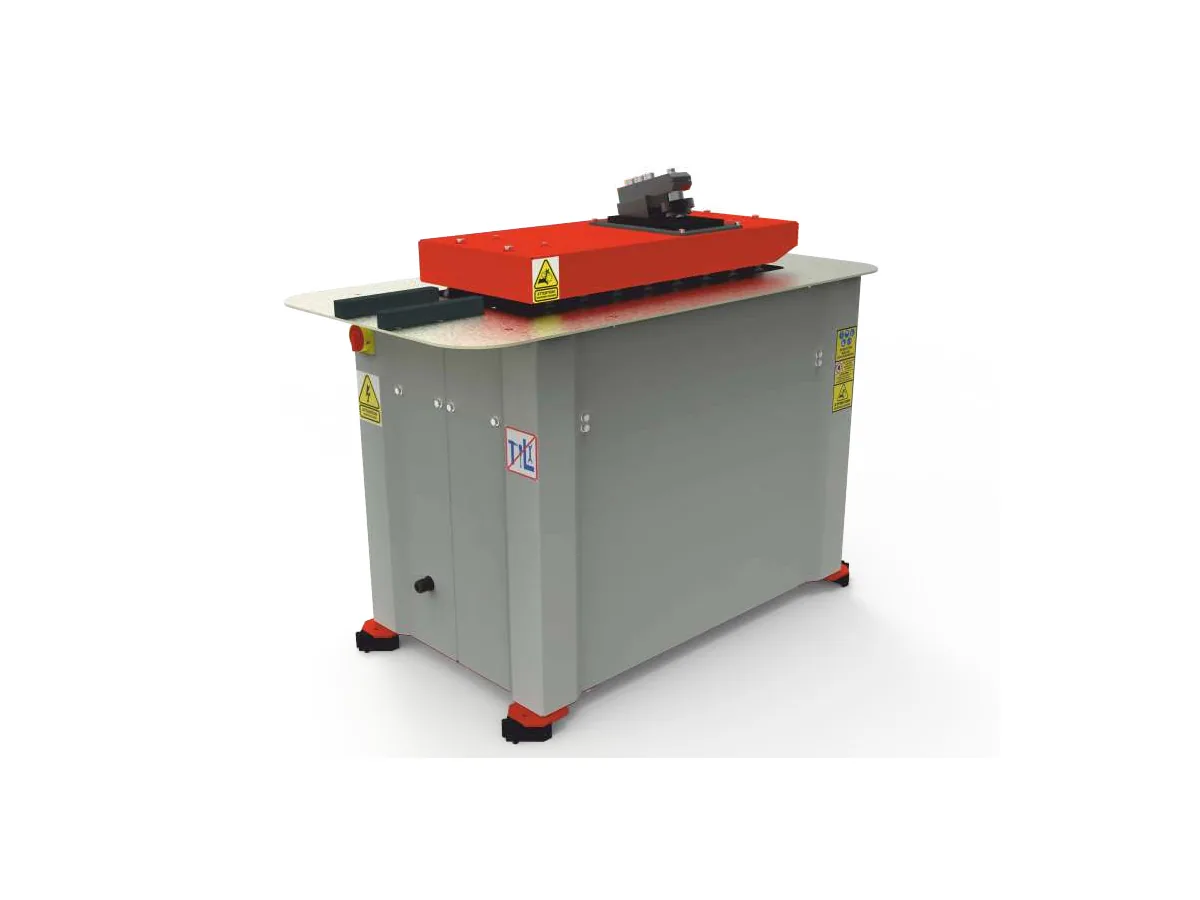
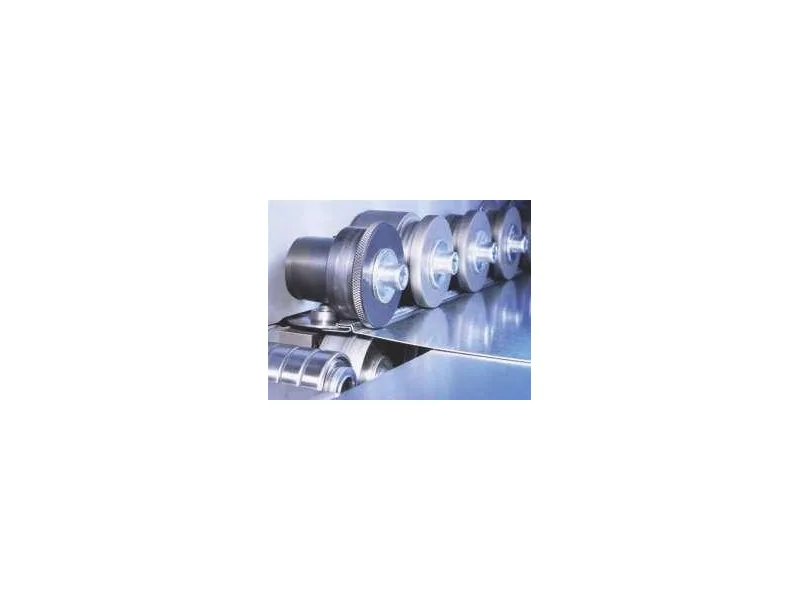
General Features
- LFM 10: 7 forming stations, forming two longitudinal profiles and one circular profile
- LFM 10: seam cleat, Pittsburgh lock and right-angle round cleat for elbows as standard
- LFM 12: 9 forming stations with 2 roller sets
- Sheet thickness 0.5–1.2 mm on both models
- LFM 12: seam cleat and Pittsburgh lock as standard, other profiles optional
- Other lock or edge shapes (drive cleats, Z cleats or snap locks, for example): tell us when you ask for a quote and we will confirm the roller tooling in the quotation
- Sturdy mechanical design for long service life
- Brake wheel makes the machine easy to use
- 380 V / 3 Ph / 50 Hz supply, and the LFM 12 draws 7.5 A
Technical Specifications
| Model | Electricity (V/Ph/Hz) | Power (kW) | Width (mm) | Height (mm) | Length (mm) | Weight (kg) |
|---|---|---|---|---|---|---|
| LFM 10 | 380V / 3Ph / 50Hz | 2 | 700 | 1100 | 1500 | 250 |
| LFM 12 | 380V / 3Ph / 50Hz | 3 | 700 | 1100 | 1500 | 400 |
Further specifications: LFM 10: 7 forming stations · LFM 12: 9 forming stations, 2 roller sets · sheet thickness 0.5–1.2 mm on both · current 7.5 A (LFM 12).
Sheet thickness capacities are given for ST37 (S235JR) mild steel, yield strength 235 N/mm² (24 kg/mm²). EBR METAL reserves the right to change models and technical specifications without prior notice.
Where It Fits in Your Duct Line
A lock former works on sheet that is already cut to size, for example on the Cut-to-Length Line. It rolls the lock profile on the part edge. The matching male edge for Pittsburgh and snap lock joints is prepared on the Duct Flanging Machine, and the seam is then closed on the Pittsburgh Seam Closer or the Duct Seam Closer. The full sequence is on the HVAC Duct Production Line page.
New to the joint itself? Our guide Pittsburgh Lock Seam Explained covers pocket depth, sealing and how it compares with a snap lock.
Pittsburgh Lock Former Models Compared
The LFM 10 is the lighter model at 250 kg and 2 kW, with 7 forming stations. The LFM 12 weighs 400 kg, has a 3 kW motor and 9 forming stations, and adds a second roller set. Both form 0.5–1.2 mm sheet and share the same 700 × 1100 × 1500 mm footprint.
Frequently Asked Questions
What is the difference between the LFM 10 and the LFM 12?
The LFM 10 uses 7 forming stations and forms two longitudinal profiles and one circular profile, with seam cleat, Pittsburgh lock and right-angle round cleat for elbows as standard. The LFM 12 uses 9 forming stations with 2 roller sets and makes seam cleat and Pittsburgh lock as standard with other profiles as options. Both models form 0.5–1.2 mm sheet.
Which profiles can the Pittsburgh Lock Former make?
The standard profiles are in the feature list above. For other lock or edge shapes, such as drive cleats, Z cleats or snap locks, tell us when you ask for a quote. We will confirm the roller tooling in the quotation.
What power supply does it need?
380 V, 3-phase, 50 Hz. The LFM 10 has a 2 kW motor and the LFM 12 a 3 kW motor that draws 7.5 A.
How is the male side of the Pittsburgh joint formed?
On the Duct Flanging Machine (FLM), which prepares part edges as Pittsburgh or snap lock male.