
Short answer: A Pittsburgh lock seam, or Pittsburgh lock for short, is a folded sheet metal seam that joins two edges of a rectangular duct along its length, usually at a corner. One edge is roll-formed into a pocket and the other gets a short L-shaped male edge. Push the male edge into the pocket, fold the pocket lip down over it by hand or with a seam closer, and the seam is locked. On rectangular duct it is the most common longitudinal seam, on straight duct and fittings alike.
The two halves of a Pittsburgh lock
The female half is the pocket, which shops call the Pittsburgh female. A lock former rolls the sheet edge into a deep channel, a station at a time, and leaves a lip standing up along one side. That lip gets folded over last. Its partner, the Pittsburgh male, is much simpler: a short right-angle bend sized to slide into the pocket.
The seam runs the length of the duct section, in the direction of the airflow, and because it usually sits where two duct walls meet, you will hear it called a longitudinal seam or a corner seam. Same joint. Between sections, Pittsburgh lock ductwork uses a transverse connection, such as a TDF flange or a slip-and-drive cleat (see TDF vs TDC Flange). Round pipe rolled from flat sheet is closed with a pipe lock, and spiral duct has its own spiral lock seam.
How a Pittsburgh lock seam is made, step by step
- Cut the part to size. The lock is formed on flat sheet already cut to the developed size of the duct wall or fitting.
- Form the pocket. The edge runs through a lock forming machine, and each station bends it a little further until the pocket is complete.
- Bend the male edge. A flanging machine bends the L-shaped return, on straight duct and on fittings such as elbows, offsets and transitions.
- Assemble. Push the male edge into the pocket along the full seam and keep the corner square.
- Close the seam. Fold the standing lip flat over the male edge. Short seams and repairs get a hammer. In production, a seam closer zips the lock shut along the duct (see Seam Closers: Pittsburgh Seam Closer vs Duct Seam Closer).
Check the first Pittsburgh lock seam after every new setup. Loose locks, cracked pockets and half-closed seams mostly come from a pocket and male edge that don’t match, sheet the tooling wasn’t set for, or parts that weren’t fully seated before closing.
Pittsburgh seam vs snap lock
Both seams put a pocket on one edge and a male edge on the other. They differ in how the joint locks. A Pittsburgh lock needs its pocket lip folded over after assembly. On a button punch snap lock, small raised projections on the male edge catch inside the pocket as the parts are pushed together, so there is no closing step at all.
SMACNA’s HVAC Duct Construction Standards, Metal and Flexible lists both among the longitudinal seams for rectangular duct, the Pittsburgh as type L-1 and the button punch snap lock as type L-2. In the 1995 edition, the figure notes attach several conditions to the snap lock and none to the Pittsburgh seam.
| Pittsburgh lock (L-1) | Button punch snap lock (L-2) | |
|---|---|---|
| How it locks | Pocket lip folded over the male edge after assembly | Projections on the male edge snap into the pocket |
| Closing step | Yes, by hand or with a seam closer | No |
| Pressure | No separate seam limit in the notes. The duct construction tables govern | Up to 4 in. wg (1000 Pa) static |
| Extra fastening | None listed for the seam | Screws at the duct ends at 4 in. wg, and at 3 in. wg (750 Pa) when the duct is wider than 48 in. (1219 mm) |
| Materials | Galvanized and other formable sheet | Not recommended for aluminum or other soft metals |
| Typical use | Straight duct and fittings | Quick assembly where its limits allow |
Above 4 in. wg those notes rule the snap lock out, and they advise against it in aluminum. Below that, it saves the closing step at assembly. Seam choice still depends on the material, the pressure class and the rest of the duct construction, and the edition your project specifies may differ from the 1995 text, so check it.
Pocket depth and edge allowance
The 1995 SMACNA notes give the Pittsburgh pocket a depth of 1/4 in. (6.4 mm) to 5/8 in. (16 mm), depending on the sheet gauge and the roll forming equipment. You will see 5/16 in. (8 mm) and 3/8 in. (9.5 mm) most.
Edge allowance has no universal number. The extra sheet that the pocket and the male edge use up depends on the pocket profile, the sheet thickness and the tooling, and the width you measure on a finished seam differs from what the flat blank needed. Take the allowance from your own tooling and prove it on a test piece before cutting a production batch.
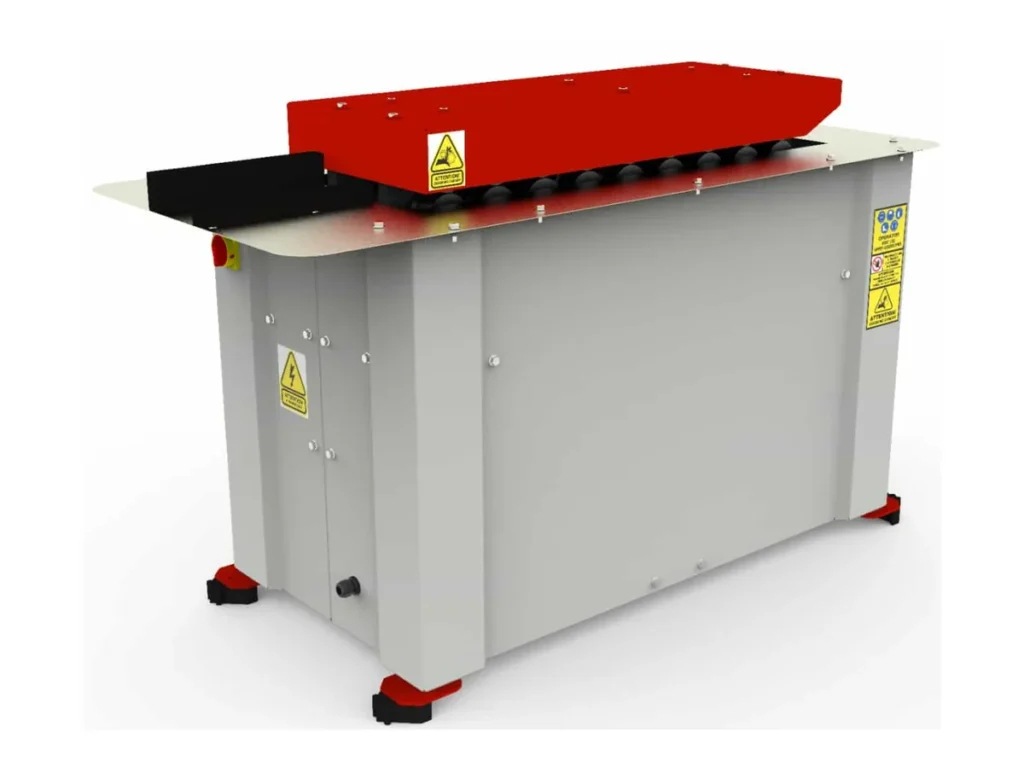
Our Pittsburgh Lock Former forms galvanized sheet from 0.5 to 1.2 mm. Which thickness a given duct needs is set by its size and pressure class in the construction standard your project follows, so check both before you order tooling.
Does a Pittsburgh lock seam need sealant?
That depends on the seal class in the project specification. In SMACNA’s definitions, Seal Class A covers all transverse joints, longitudinal seams and duct wall penetrations, Seal Class B covers transverse joints and longitudinal seams, and Seal Class C covers transverse joints only. Under A or B the Pittsburgh seam gets a duct sealant along its full length. Include the open pocket ends where the seam runs into the transverse joint, because gaps there are small and get skipped.
A closed lock holds the duct together, yet air can still find its way through the folds. Closing and sealing are two separate jobs. The seal class tells you what to seal, while the leakage of the finished duct is measured on the whole assembly, and there the joints usually weigh more. In a laboratory study of round and rectangular duct, Aydın and Özerdem (2006) measured most of the leakage at the joints, with the seams contributing less.
Making Pittsburgh lock seams in a sheet metal shop
Our machines cover the pocket, the male edge and the closing.
- Pocket: the Pittsburgh Lock Former comes in two models. The LFM 10 has 7 forming stations and the LFM 12 has 9 with 2 roller sets. Both form seam cleat and Pittsburgh lock as standard on 0.5–1.2 mm sheet, and the LFM 10 adds a right-angle round cleat for elbows. Snap locks and other profiles are optional roller tooling.
- Male edge: the Duct Flanging Machine bends the L-shaped male edge for Pittsburgh and snap lock joints, 8 or 10 mm high on 0.5–1.0 mm sheet, on straight duct and fittings.
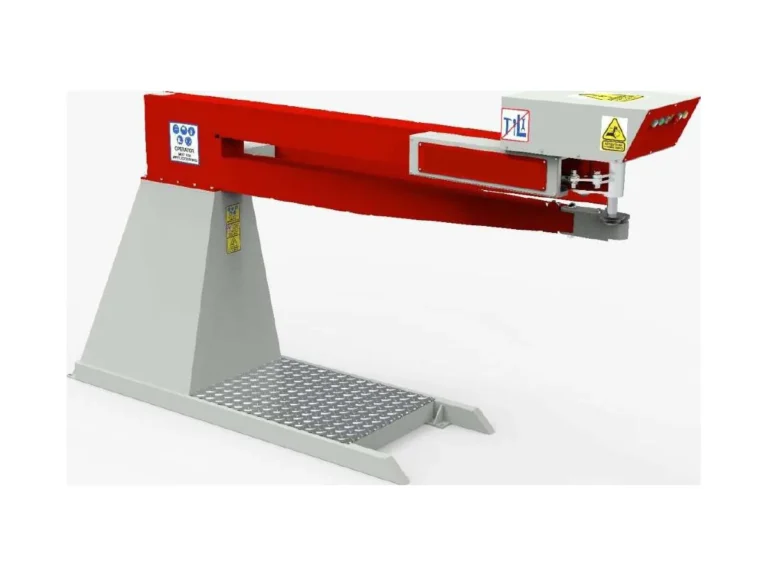
- Closing: the Duct Seam Closer zips the lock shut on square and rectangular duct at 9 m/min, on 0.5–1.2 mm galvanized and 0.5–0.7 mm stainless sheet. The Pittsburgh Seam Closer closes Pittsburgh locks on straight duct and elbows at up to 15 m/min, on sheet up to 1.0 mm.
- Round pipe: the Pipe Lock Seamer closes the longitudinal lock on round pipe.
Sheet thickness values are given for ST37 (S235JR) mild steel. All machines are on the Seaming & Lock Forming page, and the whole sequence from coil to finished duct is on the HVAC Duct Production Line page.
Frequently asked questions
What is a Pittsburgh lock seam used for?
It joins the edges of a rectangular duct along its length, usually at a corner, on straight duct and on fittings such as elbows, offsets and transitions.
What is the difference between a Pittsburgh seam and a snap lock?
A Pittsburgh lock is closed by folding the pocket lip over the male edge after assembly. A button punch snap lock locks itself when the parts are pushed together. The 1995 SMACNA notes limit the snap lock to 4 in. wg and advise against it in aluminum or soft metals, with no such seam limit for the Pittsburgh lock.
How do you close a Pittsburgh lock seam?
Fold the standing lip of the pocket flat over the male edge. A hammer does it on short seams and repairs. In production, a seam closer machine closes the lock along the duct.
Does a Pittsburgh seam need to be sealed?
Under Seal Class A or B, yes, because both include longitudinal seams. Seal Class C covers transverse joints only. Mechanical closing alone leaves small air paths in the folds.
What pocket depth does a Pittsburgh lock have?
The 1995 SMACNA notes give 1/4 in. (6.4 mm) to 5/8 in. (16 mm), depending on the sheet gauge and the roll forming equipment, with 5/16 in. (8 mm) and 3/8 in. (9.5 mm) the most common.
Can one lock former make both Pittsburgh and snap lock profiles?
With the right roller tooling, yes. Our Pittsburgh Lock Former forms the Pittsburgh lock as standard, with snap locks as optional tooling, and the Duct Flanging Machine bends the male edge for both joints.