
Once rectangular duct is cut, the sections still have to connect, and the thin, flat panels need stiffness. The TDF flange machine roll-forms the flange directly on the duct sheet. The TDF corner machine then inserts the corners into the flange. The C profile machine makes the profiles that hang the duct, while the Z and W beading machines roll stiffening beads into thin sheet. EBR METAL builds all five in its Konya factory.
TDF Flange Machines, Profile and Beading Machines
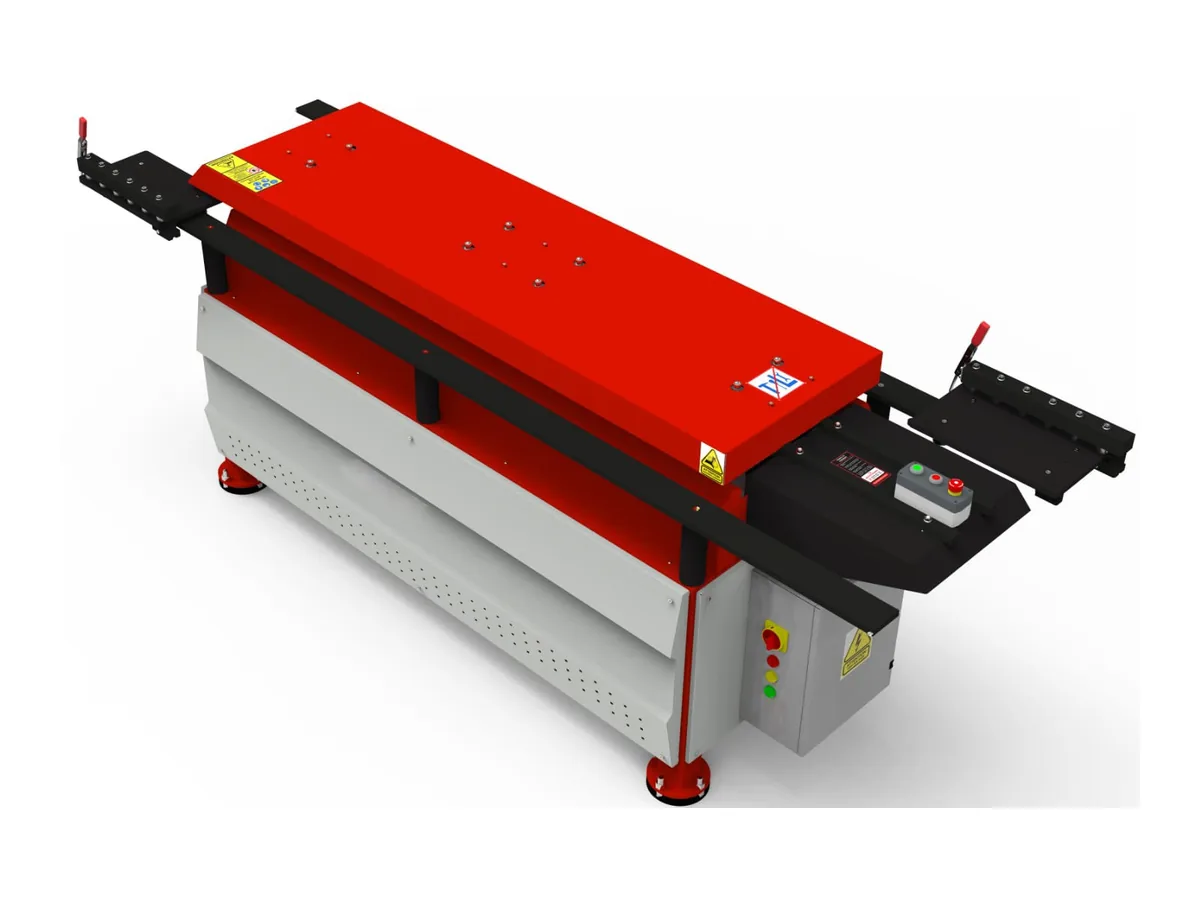
TDF Flange Forming Machine
TDF
14-station roll forming line for 20, 25, 30, 33 and 35 mm flanges on self-flanged duct, all five standard with automatic height adjustment, 0.50–1.20 mm sheet, 8 m/min. The second tooling side forms the connecting clips. With a roll change it also forms TDC flanges.
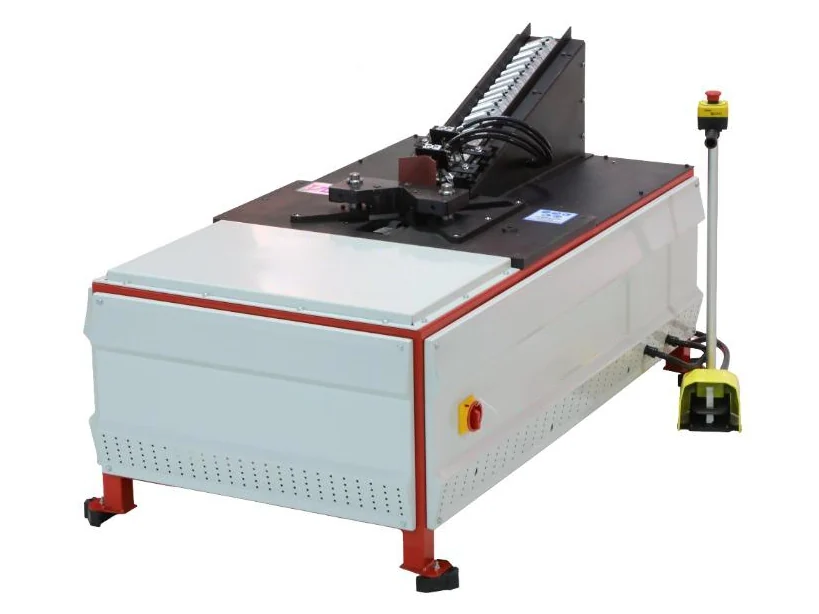
TDF Corner Machine
TCM
Corner insertion for TDF and TDC self-flanged duct at the press of a foot pedal, pneumatic (6 bar), with an automatic corner magazine. 0.5–1.2 mm sheet, 220 V single-phase. Options L20, L25 and L32.
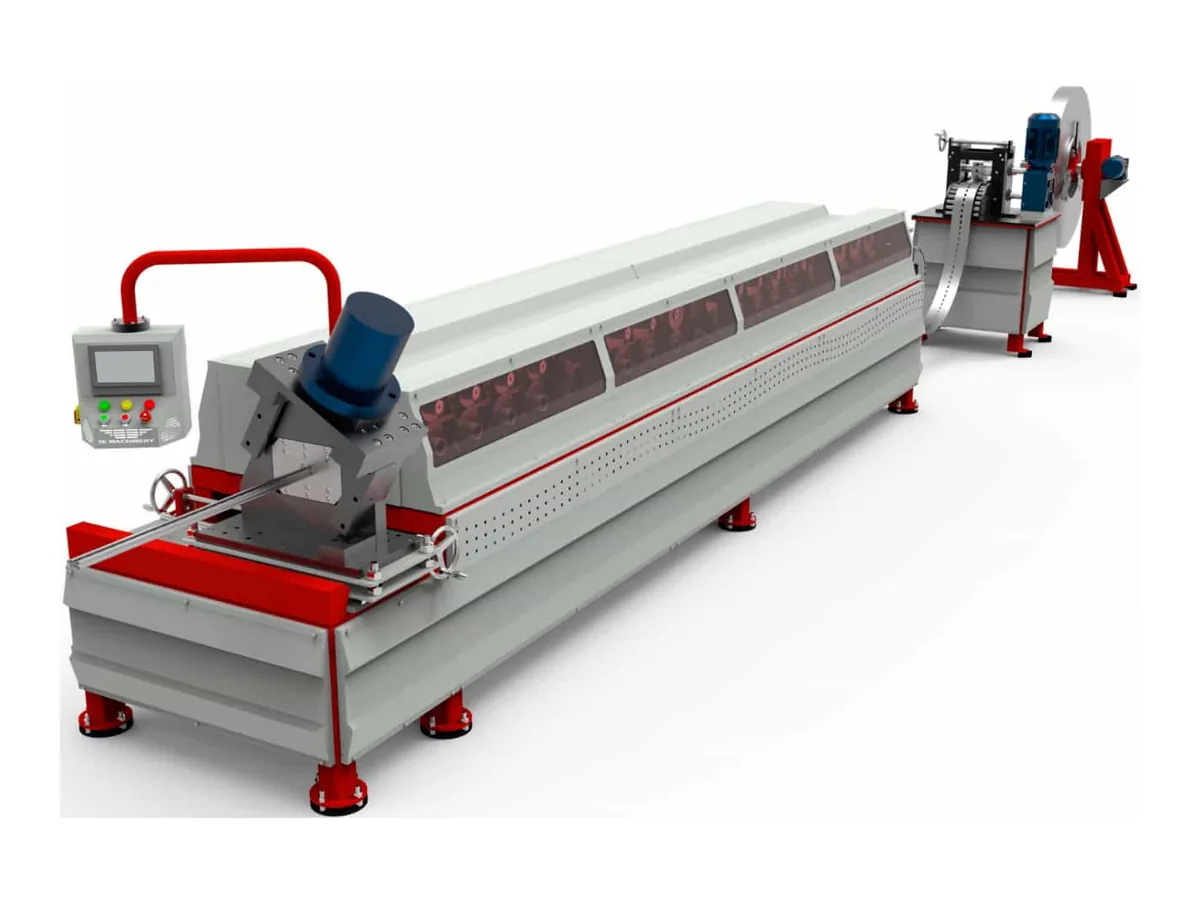
C Profile Roll Forming Machine
CPR
C, U and L profiles for hanging duct, with hydraulic punching of oval holes and cut-to-length from the PLC, for 0.60–1.20 mm sheet.
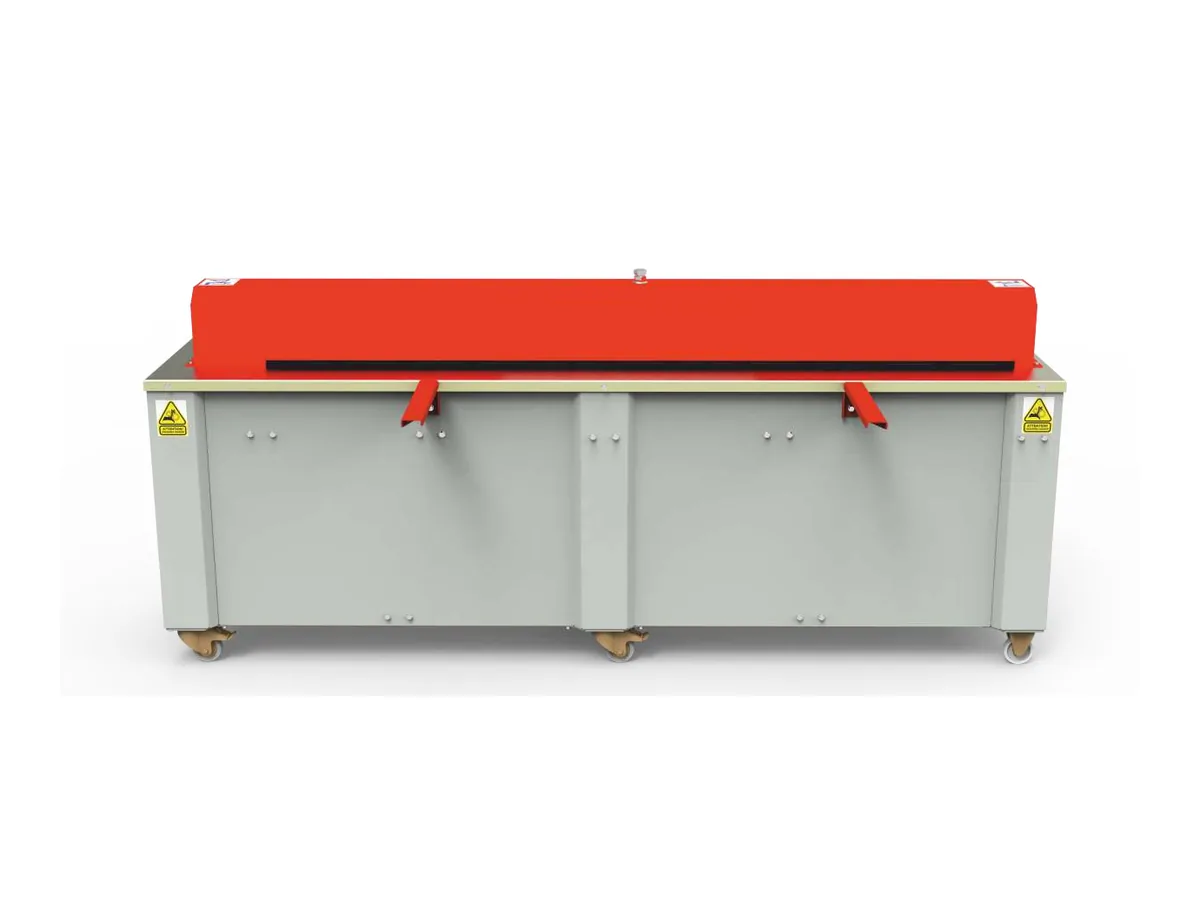
Z Beading Machine
LPM 1300 / 2100 / 2600
Stiffening beads in 0.40–1.20 mm sheet, working lengths 1300–2600 mm, adjustable bead spacing, 15 m/min, 220 V single-phase.
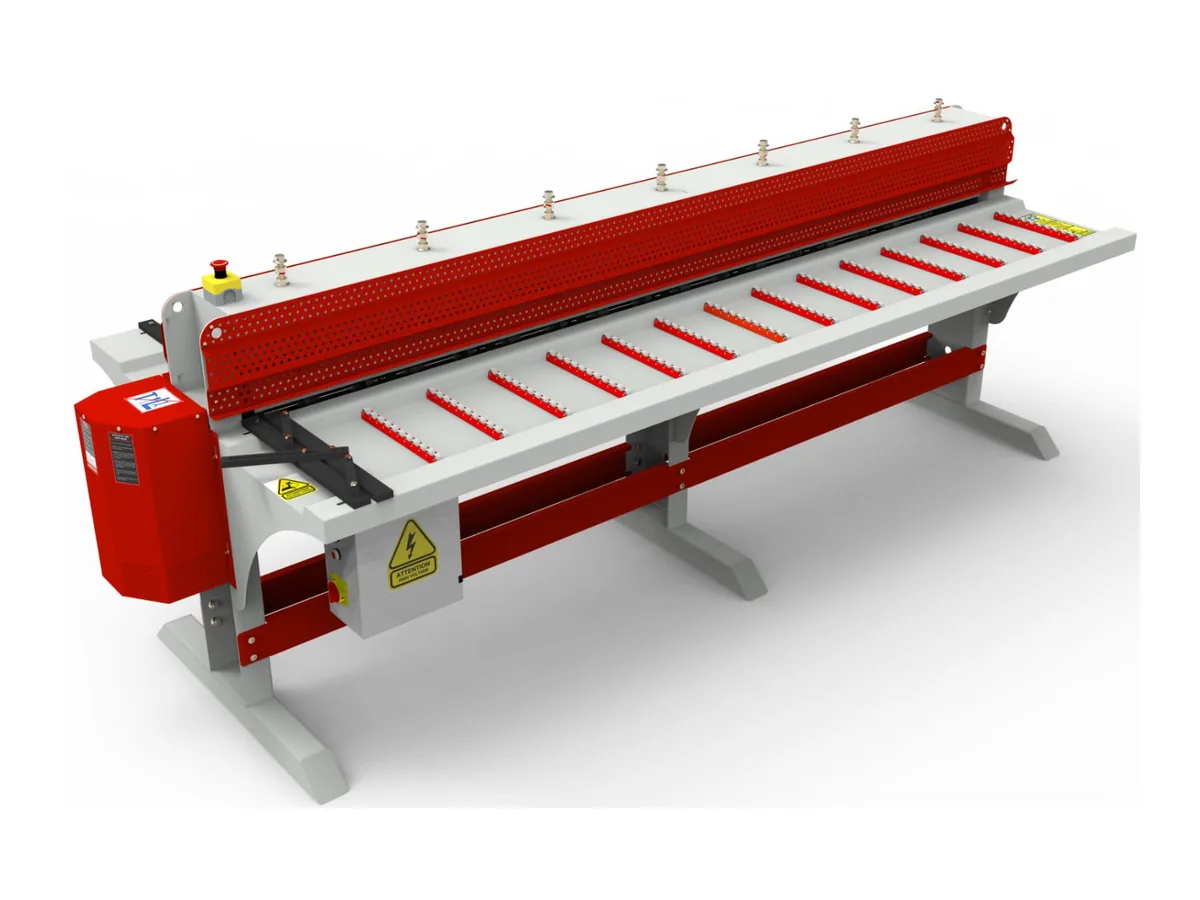
W Beading Machine
WBM 2000 / 2500
Z, trapezoid or U bead forms, 0.5–1.2 mm, working width up to 2500 mm, 15 m/min.
Compare the Flange, Profile and Beading Machines
| TDF Flange Forming (TDF) | TDF Corner Machine (TCM) | C Profile Roll Forming (CPR) | Z Beading (LPM 1300 / 2100 / 2600) | W Beading (WBM 2000 / 2500) | |
|---|---|---|---|---|---|
| What it does | Rolls the flange and the connecting clips | Inserts and presses the corners | Forms, punches and cuts hanger profiles | Rolls stiffening beads | Rolls stiffening beads |
| Duct / product | TDF self-flanged duct (TDC with a roll change) | TDF and TDC self-flanged duct | C, U and L profiles | Duct sheet | Duct sheet |
| Sheet thickness (mm) | 0.50–1.20 | 0.5–1.2 | 0.60–1.20 (others on request) | 0.40–1.20 | 0.5–1.2 |
| Sizes / options | Flange heights 20, 25, 30, 33, 35 mm | Corner tooling L20, L25, L32 | Length and quantity set on the PLC | Working length 1300 / 2100 / 2600 mm | Working width 2000 / 2500 mm |
| Bead forms | — | — | — | Z, adjustable spacing | Z, trapezoid, U |
| Working speed | 8 m/min | — | — | 15 m/min | 15 m/min |
| Power | 2 kW | 1.5 A | 7.5 kW | 0.37 / 1.5 / 1.5 kW | 1.5 kW |
| Power supply | 380 V / 3 Ph / 50 Hz | 220 V / 1 Ph / 50 Hz | 380 V / 3 Ph / 50 Hz | 220 V / 1 Ph | 380 V / 3 Ph / 50 Hz |
| Compressed air | — | 6 bar | — | — | — |
| Dimensions (mm) | 1500 × 700 × 1200 (L × W × H) | 1050 × 800 × 1250 (L × W × H) | (5500 + 4000) × 1150 × 1200 (L × W × H) | 1450–2740 long, 480–530 wide, 1050 high | 1065 × 2400 / 2900 × 1290 (W × L × H) |
| Weight (kg) | 1300 | 300 | 2400 | 210 / 360 / 410 | 850 / 1050 |
Sheet thickness is given for ST37 (S235JR) mild steel. The Z Beading Machine also forms aluminum up to 2 mm and stainless steel up to 1 mm. All EBR machines carry the CE mark.
How to Choose
Do you build self-flanged duct? You need the TDF Flange Forming Machine and, for the corners, the TDF Corner Machine. The corner machine fits each corner into the flange with no hammering.
Do you install the duct yourself? Then the C Profile Roll Forming Machine covers the hangers. The operator enters length and quantity on the PLC, and the C, U and L profiles that carry the duct on site come off punched, cut and ready to use.
Z or W beading? The Z Beading Machine suits shops that want adjustable bead spacing, a light frame (210–410 kg) or aluminum and stainless sheet. For trapezoid or U beads, or panels up to 2500 mm wide, go with the W Beading Machine. Choose the working length or width that covers your widest sheet.
TDF vs TDC Flange and Separate Slip-On Flanges
Rectangular duct sections are joined across the duct with a flange at each end, either rolled from the duct wall or added as a separate profile.
Self-flanged duct (TDF and TDC). The duct wall itself is extended and roll-formed into the flange. Before folding, the sheet is notched at the corners, which on our lines is done by the Auto Duct Line with Notching (ADF-N) or the Auto Duct Line with Notching & Cleat Forming (ADF-NC). Corner pieces then go into the four corners. Neighboring sections are bolted at the corners and held along their length by clips, with a gasket between the flanges. TDF and TDC work the same way, but their profiles differ, so corners and clips must match the system you build. A separate TDC flange machine is unnecessary, because our TDF Flange Forming Machine takes TDC rolls.
Separate slip-on flanges. Here the duct comes out plain. A flange profile is cut to length on the Flange Cutting Machine, slid over the duct end and fixed to it, for example with spot welding equipment we supply.
For a longer comparison of the two systems, read our guide TDF vs TDC Flange: What Is the Difference?
Why Duct Sheets Get Stiffening Beads
Large, flat panels of thin sheet flex easily. When the fan starts or stops, or the pressure changes, an unstiffened panel bows in and out and starts to drum. Beads give the panel a shape that resists that movement at the same sheet thickness. The bead form and the spacing between beads both change how stiff the panel gets. That is why the W beading machine offers three forms and the Z beading machine lets you set the spacing.
Beading happens while the sheet is still flat, before the edges are formed on the Pittsburgh Lock Former. For beading round parts and short manual runs, our hand operated beading machines (KT / KMT) are summarized on a separate page.
What Comes Before and After
Sheet comes from an auto duct line, which beads it inline, or from a Cut-to-Length Line followed by a stand-alone beading machine. Lock forming and seam closing follow, then flanging and corners for self-flanged duct. Slip-on flanges are cut on the Flange Cutting Machine and welded to the duct with spot welding equipment. See the full HVAC Duct Production Line.
When SMACNA calls for beading, why beads do not replace reinforcement and how bead profiles compare is explained in our guide Duct Beading: Why Rectangular Ducts Are Beaded.
Frequently Asked Questions
What is the difference between a TDF and a TDC flange?
Both are self-flanged connections where the flange is rolled from the duct wall. Their profiles differ, so each system uses its own corners and clips.
Can the TDF flange machine also work as a TDC flange machine?
Yes. It forms TDC flanges after a roll (tooling) change. Tell us at order which profiles you need, TDF, TDC or both, and the machine is supplied with the matching rolls. The TDF Corner Machine works on both.
Which flange heights does the TDF flange machine form, and how fast?
20, 25, 30, 33 and 35 mm, all standard, with automatic adjustment between them. The working speed is 8 m/min.
What does a TDF corner machine do?
It fits the corner pieces into the flange of a TDF or TDC duct, a job otherwise done by hand. The operator loads the corners, places the duct corner in the working area and presses the foot pedal. It runs on 220 V / 1 Ph / 50 Hz (1.5 A) and 6 bar compressed air. Corner tooling comes in L20, L25 and L32 and is matched to the flange size, so state your flange heights when ordering.
Do I need a separate beading machine if my auto duct line already beads?
Not for sheet that runs through the line, since every EBR auto duct line has two stiffening units. A stand-alone Z or W beading machine is for sheet cut outside the line, wider panels or shops without an auto line.
What is the difference between Z beading and W beading machines?
The Z Beading Machine (LPM) has working lengths of 1300, 2100 and 2600 mm, adjustable bead spacing and a 220 V single-phase supply. The W Beading Machine (WBM) comes in 2000 and 2500 mm working widths, forms Z, trapezoid or U beads and needs 380 V / 3 Ph / 50 Hz. Both run at 15 m/min.
What is a C profile roll forming machine used for?
Hanging ventilation duct. It makes C, U and L profiles, punches oval holes with hydraulic dies and cuts each piece to the length set on the PLC.
What is the delivery time?
Many EBR METAL machines ship from stock. A machine built to order currently takes about 2–3 weeks, and the quotation confirms the date. Spare parts usually ship from stock.