
Short answer: A seam closer folds the standing lip of a Pittsburgh lock flat over the male edge, which locks the longitudinal seam of a rectangular duct. “Pittsburgh seam closer” and “duct seam closer” are trade names, not two standard machine classes, and they overlap. What separates one machine from another is the seam profile it closes, the parts it takes (straight duct only, or elbows too), and the sheet thickness and material it can fold. A hammer still finishes short seams, repairs and the spots a machine cannot reach.
What a seam closer actually does
A Pittsburgh lock is formed on flat sheet before the duct is put together. A lock former rolls a pocket on one edge and a flanging machine bends a short L-shaped male edge on the other (the joint itself is covered in Pittsburgh Lock Seam Explained). Once the duct is assembled, the male edge sits in the pocket. Nothing holds it there yet.
Closing is the last step. The lip that stands up along the pocket gets bent down over the male edge, and the fold traps it. Do this along the full length of the seam. Where a stretch stays open, the male edge is held only by friction and the gap is an easy path for air.
Keep forming and closing apart. The lock former works on flat sheet. The seam closer works on the assembled duct, and it can only close what the earlier steps gave it. A pocket that is too shallow, or a male edge that is too long, will not close properly on any machine.
Three ways to close a Pittsburgh seam
By hand. The duct sits on a stake or the edge of a bench and the lip is hammered down in several passes, a little further each time. It needs no machine and works on fittings, short seams and site repairs. It is slow and loud, and the seam is only as good as the person holding the hammer.
Portable power closer. A hand-held tool clamps onto the corner and runs along it while rollers fold the lip. It goes to the duct, so it suits large sections and some site work, but it needs a clear run along the seam.
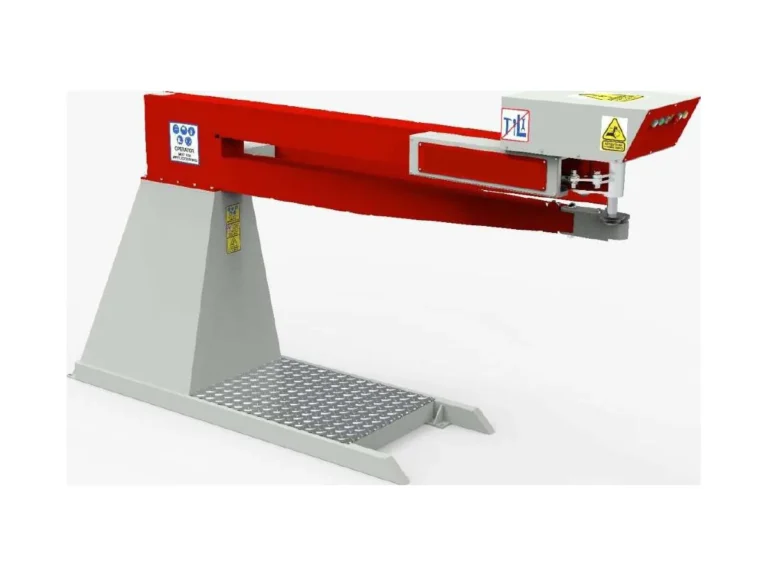
Seam closing machine. A floor-standing machine supports and guides the duct while its rolls close the lock along it. Shops use these for production because every seam gets closed the same way, at the same speed.
| By hand | Portable power closer | Seam closing machine | |
|---|---|---|---|
| Best for | Short seams, fittings, repairs, seam ends | Long seams on parts that are hard to move | Repeat production in the shop |
| Consistency | Depends on the operator | Good if the tool tracks the corner | Highest, same setup every seam |
| Speed | Slowest | Medium | Fastest |
| Noise | Loud hammering | Lower | Lower |
| Elbows and fittings | Yes | Depends on access | Only if the machine is built for them |
| Site work | Yes | Often | No |
Most shops use more than one. A machine closes the bulk of the seams and the hammer finishes the rest.
How a roller seam closer folds the lip
A roller closer bends the lip in stages. The first contact turns the lip part of the way, a later one presses it flat, and guide rolls or supports keep the closing head on the corner so it does not wander onto the duct wall.
There is no standard roll count. Some designs use one main roll and two passes, closing on the way out and pressing the seam on the way back. Others spread the bend over two or three rolls. Setup and a matching pocket count for more than the number of rolls. Watch the seam ends, too: on duct with integral flanges, some closers cannot reach the last few inches next to the flange, and those get finished by hand.
What affects closing quality
Most bad seams trace back to one of these:
- Pocket and male edge that don’t match. The 1995 SMACNA notes give the Pittsburgh pocket a depth of 1/4 in. (6.4 mm) to 5/8 in. (16 mm). The male edge has to suit the pocket your former rolls.
- Sheet outside the machine’s range. Thicker sheet needs more force, and stainless steel springs back more than galvanized. Machines are often rated lower for stainless for that reason.
- Poor alignment or support. A duct that is not square, or not supported, twists as the rolls push on it.
- Worn or dirty rolls. They close unevenly and scratch the zinc coating.
When something goes wrong, the defect usually tells you where to look:
- Lip partly open: the head lost the corner, the duct was not fully seated, or the seam end was out of reach.
- Crushed pocket: too much pressure or the wrong roll profile.
- Cracked fold: sheet too hard or too thick for the bend, or a seam that was closed and reopened.
- Twisted duct: uneven support or misalignment.
- Scratched coating: damaged or dirty rolls.
- Seam that opens later: the male edge was never fully inside the pocket.
Before adjusting the closer, check whether the profile was already wrong when the duct reached it, because then the fix belongs at the lock former. After you change sheet, thickness or tooling, close one test piece and check it before running the batch.
Does machine closing make the seam airtight?
No. Closing locks the seam mechanically. Sealing is a separate job set by the project specification. In SMACNA’s seal classes, Class A and Class B both include longitudinal seams, and Class C covers transverse joints only. A Pittsburgh seam closed on a machine is still a longitudinal seam, so under A or B it gets sealed like any other.
We know of no published test showing that machine-closed Pittsburgh seams leak less than well hand-closed ones. What a machine gives you is the same closing on every seam. Where seams are sealed, include the open pocket ends where the seam meets the transverse joint. For the whole duct, joints tend to matter more than seams: in a laboratory study of round and rectangular duct, Aydın and Özerdem (2006) measured most of the leakage at the joints.
Closing seams on elbows and fittings
SMACNA lists the Pittsburgh lock for straight duct and fittings alike, and the lock itself is the same on both. Access is what changes. On a radius elbow the seam follows the curved edge of the cheek, so the closer has to follow a curve. Seams on offsets and transitions are short and often end close to a flange or another seam.
That is where machines differ most. A closer built for straight duct needs a long straight corner. One built for elbows has to keep the rolls on the seam around the bend. Whatever the machine, check fittings for stretches the rolls did not reach and finish those by hand.
Safety at the seam closer
The main hazard on a roller closer is the nip between the rolls and the sheet. US machine-guarding rules (OSHA 29 CFR 1910.212) name ingoing nip points as a hazard that guarding must cover. Keep the guards on and keep hands out of the closing zone. Gloves protect against sheet edges while you handle parts, but a glove near running rolls can be pulled in. Support long duct so it cannot swing or drop, stop and isolate the machine before clearing a jam, and wear eye and hearing protection when hammering seams.
Seam closers from EBR
We build two seam closers, plus the machines that make the lock in the first place.
- Pittsburgh Seam Closer (PSC): closes Pittsburgh locks on straight duct and elbows at up to 15 m/min, on sheet up to 1.0 mm, with a 1250–2100 mm working width. It runs on 230 V single-phase power (2.2 kW) with a 6 bar air supply, and it is quiet in operation.
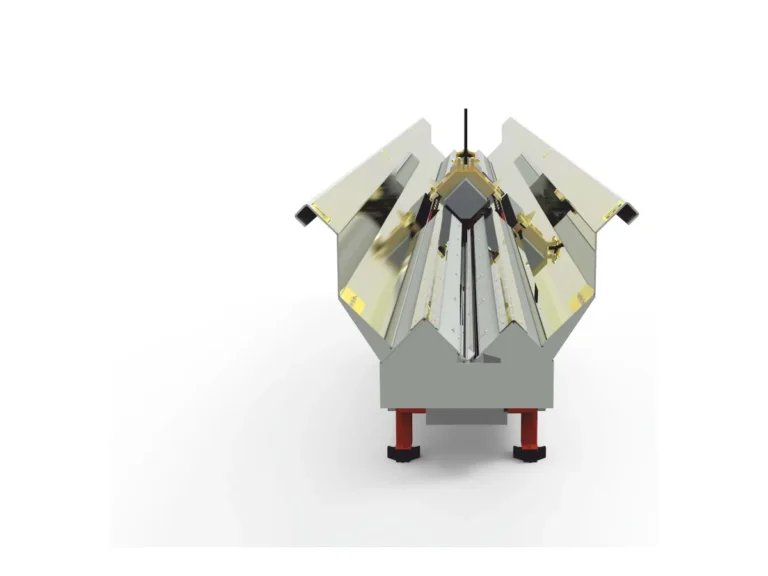
- Duct Seam Closer (SCM): zips the lock shut on square and rectangular duct at 9 m/min, on 0.5–1.2 mm galvanized and 0.5–0.7 mm stainless sheet. It runs on 380–400 V three-phase power (3 kW), and its seaming rolls are 2379 cold work tool steel.
- Before closing: the Pittsburgh Lock Former rolls the pocket and the Duct Flanging Machine bends the male edge.
If you close a lot of elbows, or only have single-phase power, look at the PSC. For straight duct in heavier galvanized sheet or in stainless, look at the SCM. Sheet thickness values are given for ST37 (S235JR) mild steel. All of these machines are on the Seaming & Lock Forming page, and the full sequence from coil to finished duct is on the HVAC Duct Production Line page.
Frequently asked questions
What is a Pittsburgh seam closer?
A machine or power tool that folds the pocket lip of a Pittsburgh lock over the male edge after the duct is assembled, which locks the longitudinal seam.
Is a duct seam closer the same as a Pittsburgh seam closer?
The names overlap, and neither is a standard class. Compare machines by what they close: the seam profile, straight duct or elbows, and the sheet thickness and material range.
Can a seam closer close elbows?
Only if it is built for it, because the seam on a radius elbow follows a curve. Our Pittsburgh Seam Closer closes Pittsburgh locks on elbows as well as straight duct.
Do machine-closed seams still need sealant?
Yes, when the seal class requires it. Seal Class A and B include longitudinal seams, however they were closed. Seal Class C covers transverse joints only.
Why are seam ends sometimes closed by hand?
On some ducts, especially with integral flanges, the rolls cannot reach the last few inches of the seam, so those get hammered down by hand.
What sheet thickness can a seam closer handle?
It depends on the machine. Our Pittsburgh Seam Closer takes sheet up to 1.0 mm, and our Duct Seam Closer takes 0.5–1.2 mm galvanized and 0.5–0.7 mm stainless sheet.